

Last Updated: October 26, 2026
Quick Summary
Workout clothes for pregnancy are engineered specifically for a changing body, with integrated support that moves with you across all three trimesters. The best maternity activewear serves three purposes: supporting your growing belly, adapting as your body changes, and allowing you to stay active without constant adjustments.
- Specialist fitness clothing for pregnant women can reduce bump bounce by half, even when running.
- Your ribcage expands one to two band sizes by the third trimester, so maternity sports bras need multiple hook-and-eye positions to adjust.
- Over-the-bump waistbands provide full coverage and maximum support, while under-the-bump designs offer more freedom of movement.
- Buy maternity activewear for your current body, not ahead, because loose waistbands slide down during movement and provide less support.
- Integrated belly support eliminates the need for separate bands that roll up or slip down during workouts.
Table of Contents
- What Makes Workout Clothes for Pregnancy Different
- Maternity Workout Leggings: Belly Support and Comfort
- Maternity Sports Bras: Adjustable Support Through Every Trimester
- Maternity Workout Tops: Versatile Tanks and Shirts for All Activities
- Maternity Activewear for Running: Built-In Support That Stays in Place
- Key Features to Prioritize When Selecting Pregnancy Activewear
- Common Mistakes to Avoid When Shopping for Maternity Activewear
- Start Your Pregnancy Fitness Journey with Proper Support
- Frequently Asked Questions
What Makes Workout Clothes for Pregnancy Different
When your body is changing rapidly, regular activewear becomes a problem. Your favorite leggings pinch around the growing bump. Sports bras that fit perfectly now dig into your expanding chest. Tank tops ride up and leave your belly exposed.
Pregnancy activewear isn't just regular clothes in bigger sizes. It's engineered specifically for a changing body. At Bia and Hera, we've designed maternity activewear that anticipates these shifts across all three trimesters. The key is integrated support that moves with you, not against you.
Specialist fitness clothing for pregnant women can reduce bump bounce by half, even when running University of Portsmouth research on pregnancy activewear. That's not just comfort, that's functional support that lets you keep moving safely and confidently.
The best workout clothes for pregnancy serve three purposes: they support your growing belly, adapt as your body changes, and allow you to stay active without constant adjustments. Whether you're running, lifting, or flowing through prenatal yoga, the right gear stays in place and keeps you comfortable.
Maternity Workout Leggings: Belly Support and Comfort
Maternity workout leggings are the foundation of pregnancy activewear. They're built differently than regular leggings because they need to handle a growing bump while staying squat-proof and supportive through every movement.
The best maternity leggings offer full bump coverage without rolling down or sliding during exercise. Look for high-waisted designs that provide continuous support rather than creating pressure points. Proper workout clothes support back health, a key concern when choosing maternity activewear. Four-way stretch fabric is essential, it expands as you do and moves with your body through all three trimesters.
Over-the-bump vs. under-the-bump waistbands
Over-the-bump waistbands sit above your entire belly and support it from underneath. This design works best if you prefer full coverage and maximum support. The band stretches as your bump grows, so the leggings adapt naturally without needing to size up mid-pregnancy.
Under-the-bump waistbands sit below the belly and support it from underneath like a shelf. Many pregnant athletes prefer this style because it feels less restrictive and allows more freedom of movement. The trade-off is that you need to ensure the waistband doesn't slide down during high-impact activities like running or jumping.
Fabric performance and squat-proof opacity
Opacity matters. You need leggings that don't become transparent when you bend, squat, or lunge. Look for thick, dense fabrics with enough weight to maintain privacy during any movement. Moisture-wicking is equally important, pregnancy increases body temperature, and breathable fabric helps regulate heat during workouts.
Seam placement affects comfort significantly. Seams that run down the back of the leg can dig into your lower back as your posture shifts during pregnancy. Center-seam or minimal-seam designs reduce pressure points and let you move more freely.
Maternity Sports Bras: Adjustable Support Through Every Trimester
Your bust can change within weeks during pregnancy, and the change isn't only in cup size. The ribcage expands too, often by one to two band sizes by the third trimester, which is why a bra that fit at eight weeks can feel restrictive by twenty. A regular sports bra becomes painful and ineffective because it can't accommodate both changes at once. Maternity sports bras are built around that dual expansion.
Band sizing vs. cup sizing: what actually changes
Most pregnant athletes focus on cup size and overlook the band. But band fit drives support. If the band rides up in back, the cups tip forward and the bra stops supporting the bust during movement.
For cups, prioritize stretch in the fabric rather than a fixed molded shape. A bra that relies on rigid cups will stop fitting once your bust grows; one with four-way stretch cups adapts across a cup size or more. If you're between sizes, size to the larger band and use the tighter hook rows early in pregnancy, then move to the looser rows as your ribcage expands.
Encapsulation vs. compression: which support style fits your workout
Compression bras flatten the bust against the chest to reduce movement. They work well for yoga, prenatal Pilates, and low-impact walking, where bounce is minimal and comfort matters most. Encapsulation bras use separate cups to support each breast individually, which reduces vertical and side-to-side motion more effectively during running and high-impact training.
A common pattern among pregnant runners is to switch from a compression bra to an encapsulation or hybrid design once they reach the second trimester, when bust size and bounce both increase. If you're lifting or doing prenatal strength work, a medium-support encapsulation bra usually gives enough stability without the heat buildup of a high-impact running bra.
Nursing access and postpartum value
Many maternity sports bras double as nursing bras, with clip-down cups or pull-aside openings. If you plan to nurse or pump, check that the access opening works with your pump flange, some clip-down designs are easy to use one-handed, while others require two hands and a mirror. Bras with a soft, wireless band tend to be more comfortable for postpartum wear, when breast tenderness and engorgement make rigid underwires painful.
A bra that works for pregnancy and nursing extends its cost per wear considerably. Look for bras marketed as maternity-to-nursing, with adjustable bands and clip-down cups, rather than pregnancy-only designs that stop fitting after birth.
Maternity Workout Tops: Versatile Tanks and Shirts for All Activities
A maternity workout top needs to cover your growing belly while allowing freedom of movement. Scoop necks and V-backs offer flattering silhouettes that work from first trimester through postpartum.
The Arc Maternity Tank with Built-in Belly Band combines classic design with integrated support. The scoop neckline is timeless, while the built-in belly support means you don't need a separate band.
Arc Maternity Tank with Built-in Belly Band →
Built-in belly support eliminates the need for separate belly bands that roll up or slip down. Integrated support stays exactly where you need it, moves with your body, and simplifies your maternity activewear wardrobe.
Maternity Activewear for Running: Built-In Support That Stays in Place
Running while pregnant feels different. Your center of gravity shifts, your joints loosen, and impact feels heavier. This is where specialized maternity activewear for running becomes essential.
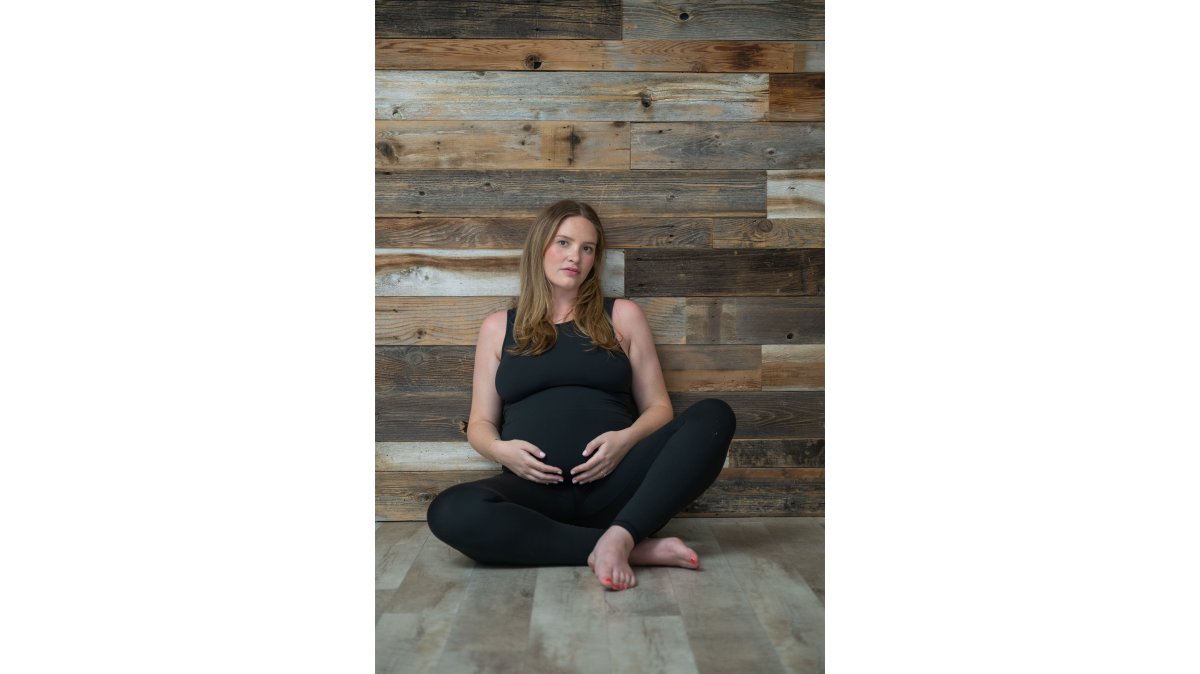
Why specialized running gear matters
Regular leggings bounce and shift with each stride. Maternity running gear is designed to minimize bounce and keep your bump stable. This reduces strain on your lower back and ligaments, which already bear extra weight during pregnancy. Integrated belly support means the leggings work with your body, not against it.

High-impact exercise demands gear that stays in place. A loose waistband or unsupportive fabric becomes a distraction when you're trying to focus on your run. The right maternity activewear for running lets you concentrate on your pace and breathing, not on adjusting your clothes.
Moisture-wicking and breathable fabrics for high-impact exercise
Running generates heat and sweat. Pregnancy amplifies both, your body temperature runs higher, and you perspire more. Moisture-wicking fabrics pull sweat away from your skin and dry quickly, preventing chafing and discomfort.
Breathable fabric is equally critical. Tight, non-breathable materials trap heat and create an uncomfortable microclimate against your skin. Look for performance fabrics designed specifically for active wear, they're engineered to handle intense movement while keeping you cool and dry.
Key Features to Prioritize When Selecting Pregnancy Activewear
Most maternity activewear guides list the same features, stretch, support, breathability, without explaining how those features should change as your pregnancy progresses or how they map to the activity you're actually doing. This section covers the features that matter most, organized around the two questions pregnant athletes ask most: how do I size this across three trimesters, and which pieces fit which workout?
Trimester-by-trimester fit and sizing
First trimester (weeks 1-13): Your body may not look different yet, but bloating and breast tenderness are common. Buy your pre-pregnancy size in maternity styles rather than sizing up.
Second trimester (weeks 14-27): The bump becomes visible and your center of gravity shifts. This is when over-the-bump waistbands start to earn their place, and when integrated belly support becomes noticeably more comfortable than a separate band.
Third trimester (weeks 28-birth): Fit changes fastest here. You may need to loosen bra bands, switch to lower-compression leggings, and choose tops with longer lengths. Many pregnant athletes find that bras often need a second adjustment.
Common Mistakes to Avoid When Shopping for Maternity Activewear
Buying the wrong size is the most common mistake. Many pregnant athletes buy maternity activewear too early or in sizes that are too large, assuming they'll grow into them.
Watch out: Sizing too far ahead leaves you with baggy, unsupportive clothes that don't provide the integrated belly support you need during workouts.
Another mistake is choosing style over function. Maternity activewear should be flattering, but support and comfort matter more. A beautiful piece that rolls down or digs in won't get worn, no matter how it looks.
Don't assume all maternity activewear is created equal. Cheap belly bands and poorly designed leggings often fail during the exact movements you need them for.
Start Your Pregnancy Fitness Journey with Proper Support
Staying active during pregnancy requires gear that supports your changing body. Learn the broader safety guidelines for exercising while pregnant before beginning a workout routine.
Bia and Hera's approach to maternity activewear centers on integrated support that stays put during running, lifting, and stretching. See the Arc Maternity Tank with Built-in Belly Band for a concrete example of how integrated support works in practice.
The foundation of comfortable pregnancy fitness is gear engineered for your changing body. Bia and Hera maternity activewear combines patent-pending integrated belly support, adaptive stretch fabric, and moisture-wicking performance to keep you moving confidently through every trimester.
| Feature | Over-the-Bump | Under-the-Bump | Integrated Support |
|---|---|---|---|
| Full Belly Coverage | Yes | Partial | Yes |
| Freedom of Movement | Moderate | High | High |
| Support Stability | Excellent | Good | Excellent |
| Best For | Maximum support seekers | Movement freedom preference | Running and lifting |
Frequently Asked Questions
Can you wear regular workout clothes while pregnant?
Regular workout clothes become uncomfortable as your belly grows and your body changes. Specialized workout clothes for pregnancy feature over-the-bump or under-the-bump waistbands, extra stretch, and integrated belly support that regular activewear lacks. This support prevents discomfort and allows you to maintain your fitness routine safely.
How do I know if maternity activewear will work postpartum?
Many maternity activewear pieces are designed with postpartum use in mind. Look for styles with nursing access, adjustable fits that work as your body changes after birth, and neutral colors that transition easily into your regular rotation. Bia and Hera's maternity activewear, for example, features adaptive stretch fabric that grows with your body during pregnancy. Check product descriptions to confirm postpartum versatility before purchasing.
Is integrated belly support better than wearing a separate belly band?
Integrated belly support built directly into activewear offers several advantages over separate bands. Bands often roll up during high-impact activities like running or lifting, whereas integrated support stays in place and moves with your body. Integrated designs also eliminate the need to purchase and manage a separate piece, simplifying your maternity wardrobe. The Arc Maternity Tank with built-in belly band from Bia and Hera, priced at $78.00, demonstrates how integrated support provides consistent comfort during running, lifting, yoga, and everyday wear without the inconvenience of a separate band.
